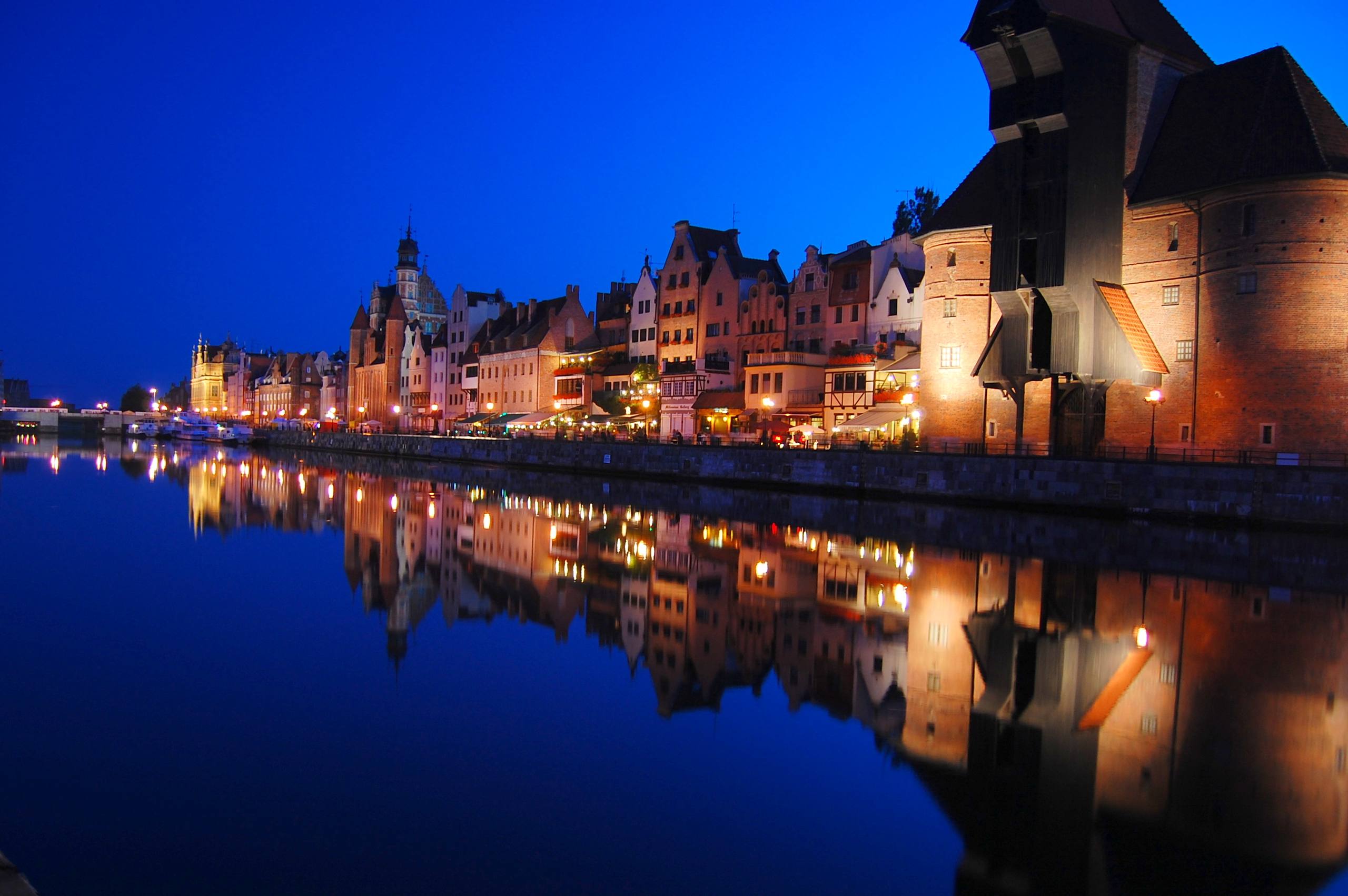
The Motława river at blue hour, with the lit waterfront and the Crane mirrored in still water
Photo: Stanisław Leśniewicz, CC BY 3.0

Things to do in Gdańsk

Come for PostgreSQL. Stay for the stolen masterpiece, the crane that ran on human legs and the wall that changed Europe.

PGConf.PL is on Tuesday 24 November. If you can, keep Wednesday 25 November free.

The historic centre is a 20-minute walk from the conference room, the Christmas market will already be open, and the Crane is free on Wednesdays. Here is how we would spend that day, from breakfast to the last drink. It is too much for one day, so pick what you like or stay longer.

Conference day, coffee break

Start with the building you are in

ARCHE Dwór Uphagena began in 1800 as a summer house for the Uphagens, a Gdańsk merchant family, out in what were then the suburbs. In 1852 the widow Maria Wilhelmina Uphagen sold it to a timber merchant who turned it into a hospital, run by Borromean sisters from Trier. Their chapel, finished in 1860, still stands in the courtyard. Go and find it between talks.

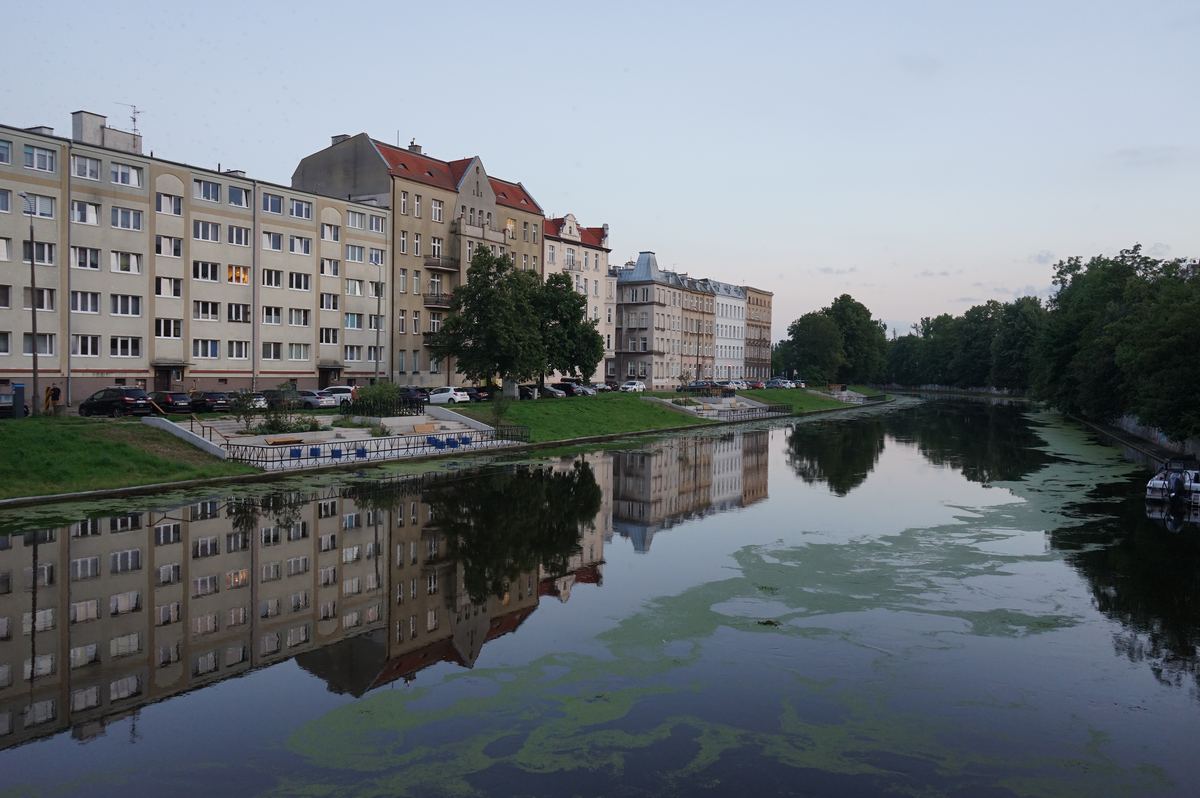
Outside the door is Dolne Miasto, the Lower Town: canals, red-brick tenements and a slow revival of galleries and cafés.

Apartment houses in Dolne Miasto reflected in a still canal at dusk
The Motława in Dolne Miasto, the district around the venue. Photo: Maciej Poltorak, CC BY 4.0
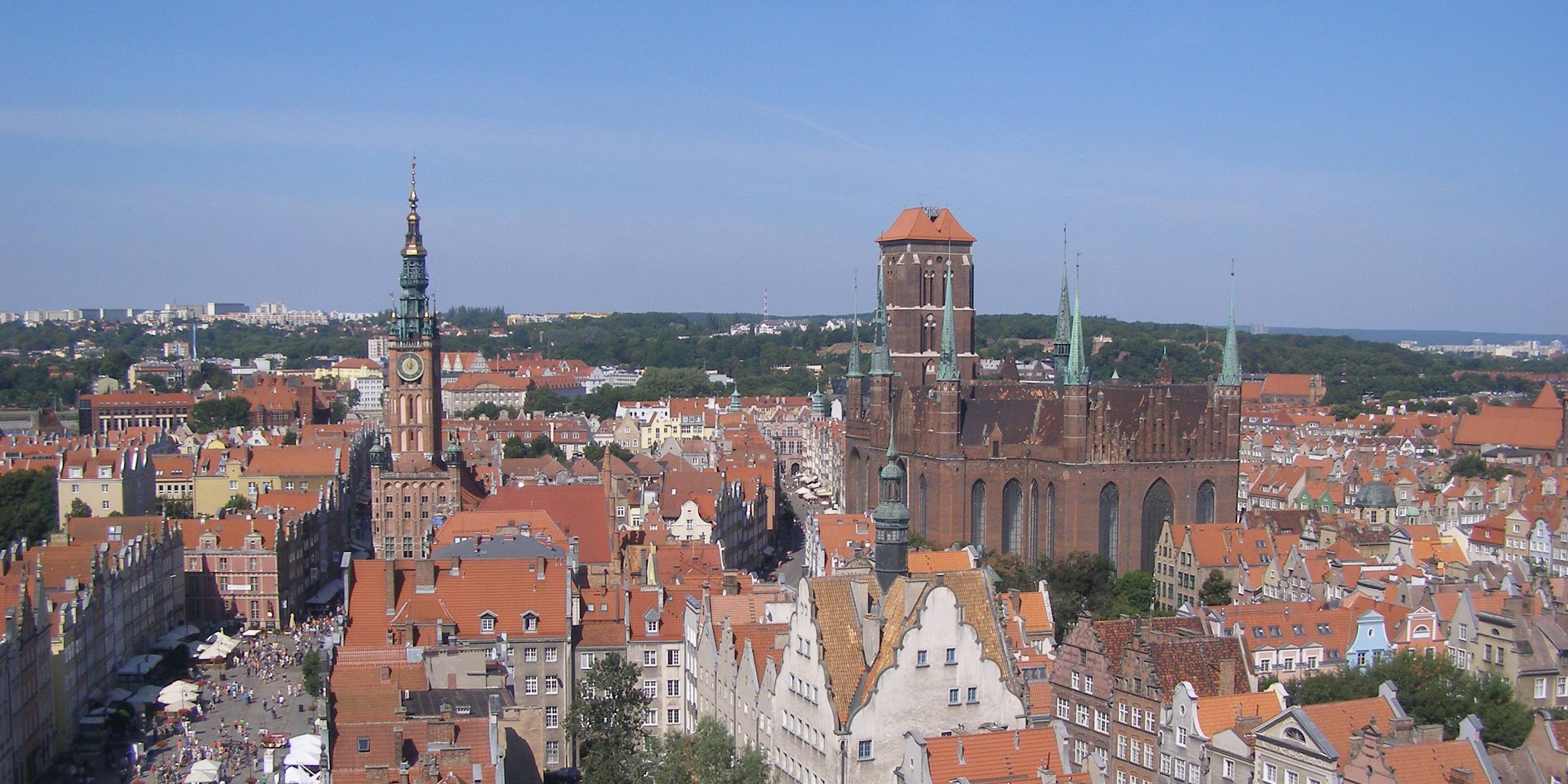
The red roofs of the historic centre from above, with the Town Hall spire and the massive tower of St Mary's
The historic centre from above, with the Town Hall spire on the left and St Mary's on the right. Photo: Andrzej Otrębski, CC BY-SA 4.0

Wednesday, 09:30

Everything here is younger than it looks

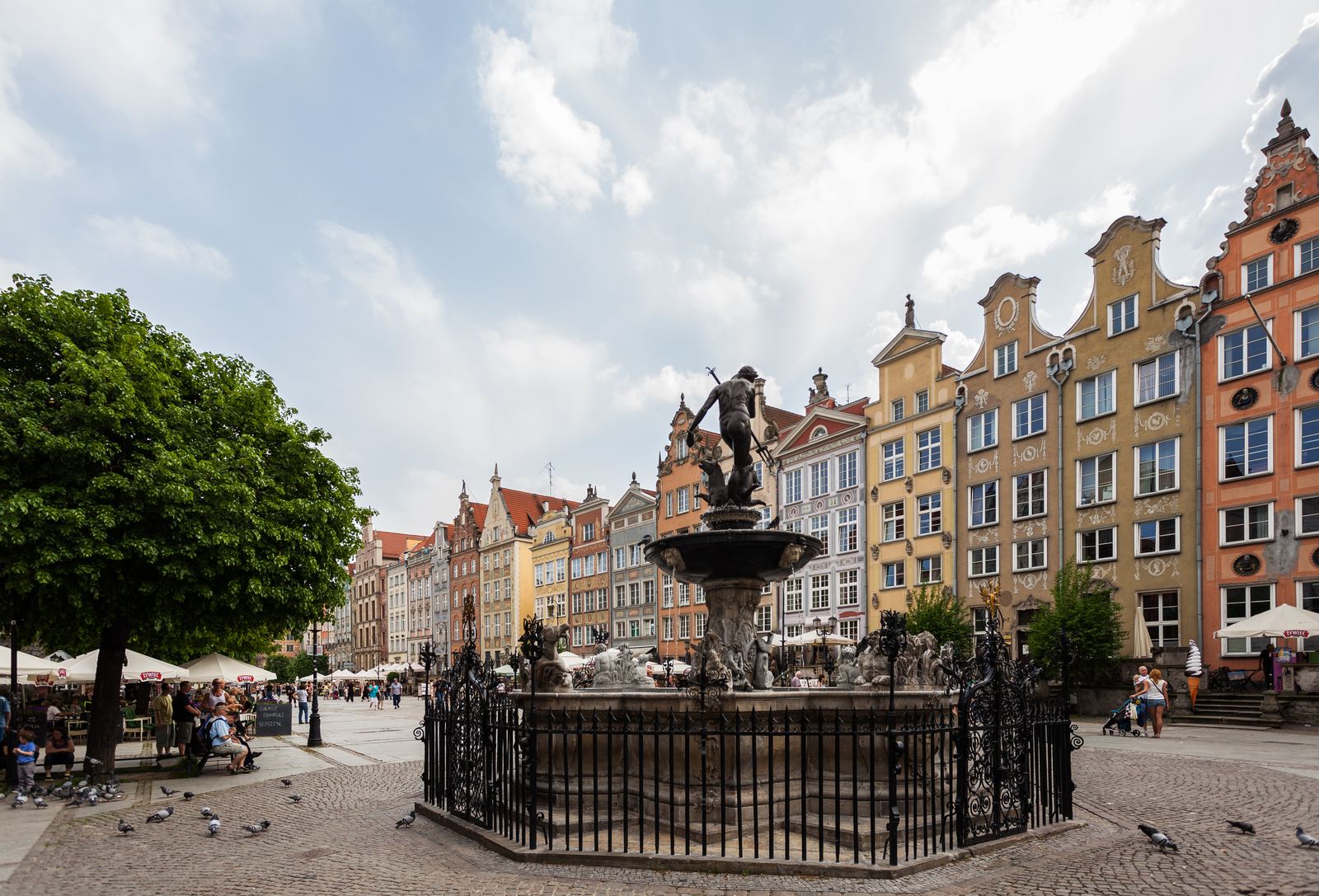
Walk in through the Golden Gate and follow Long Street down to the Long Market. Tall gabled houses, painted facades, Neptune with his trident on a fountain from 1633. It looks as if nothing has changed for 400 years.

In spring 1945 this was a field of ruins. The Museum of Gdańsk puts the destruction of the centre at 95 per cent. In 1948 the city decided to rebuild it, and the streets you are walking through are largely the work of the 1950s: old facades on new floor plans. Even Neptune was taken away during the war and only came back in the 1950s.

Look at the gables again once you know that. Each one was put back on purpose.

Free to walk around, 18 minutes on foot from the venue. Artus Court, the merchants' hall behind Neptune, opens at 10:00. Museum of Gdańsk, map.

Neptune's Fountain on the Long Market, with a row of tall painted gabled houses behind it
Neptune's Fountain and the Long Market. Photo: Diego Delso, CC BY-SA 3.0

11:00

The masterpiece a privateer brought home

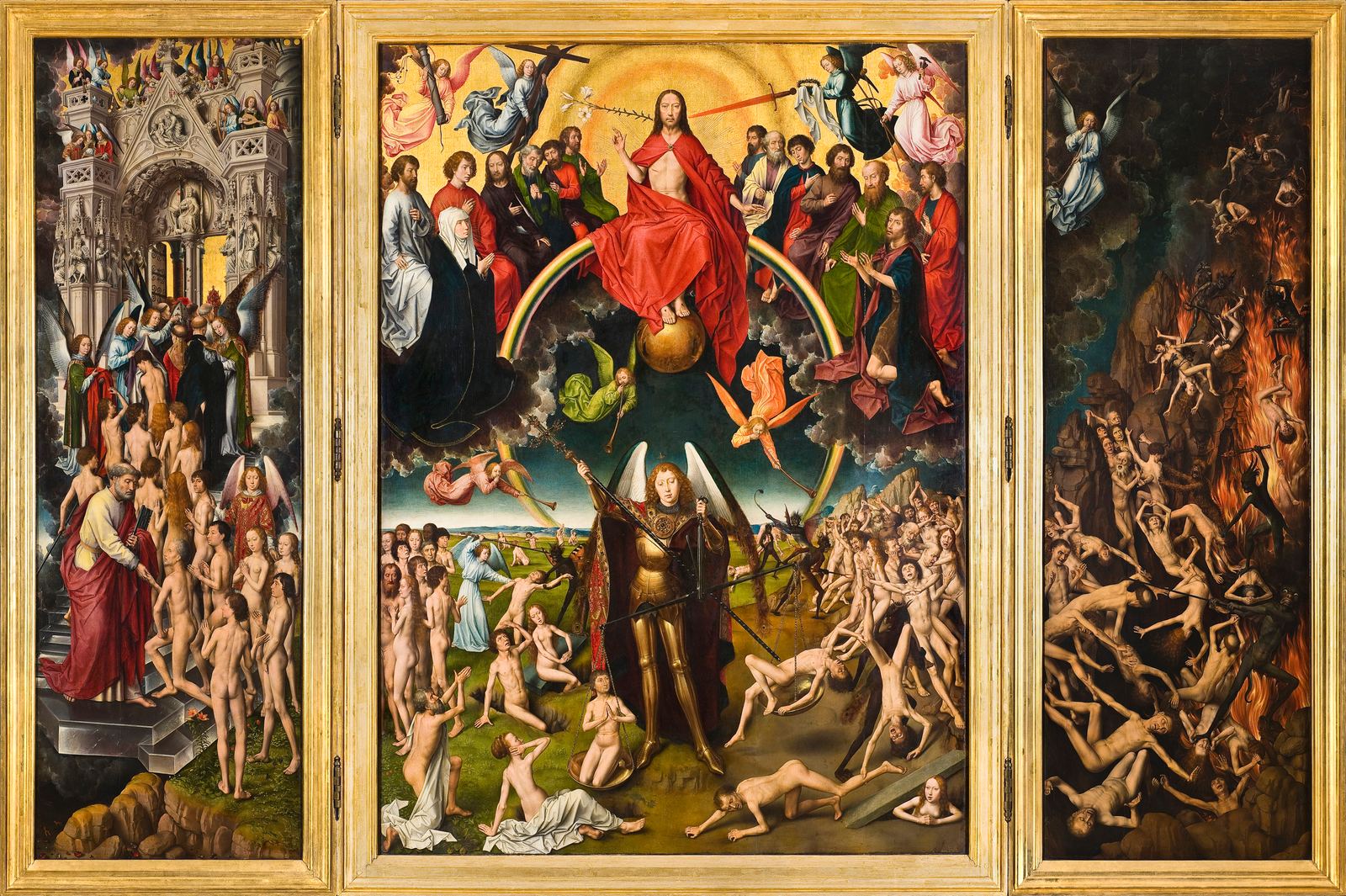
In 1473 Gdańsk privateers under Paul Beneke seized the San Matteo, a ship sailing from Bruges to Italy. In the cargo was a huge triptych by Hans Memling, The Last Judgement, painted for Angelo Tani of the Medici Bank's Bruges branch and meant for a chapel near Florence. It never arrived. The ship's owners gave it to St Mary's, one of the largest brick churches in the world, and it stayed there despite a long lawsuit from Italy.

Then everyone else wanted it. In 1807 it was taken to Paris for Napoleon's museum, where it was labelled as a Jan van Eyck. It came home through Berlin in 1817. In 1942 it was hidden from the bombing, in 1946 the Red Army found it and sent it to the Hermitage, and ten years later it came back to Poland.

The original belongs to the National Museum, 13 minutes on foot from the venue, but it is off display for conservation work and due back at the start of 2027. Until then, St Mary's has a copy, and you have a reason to come back.

St Mary's is open on weekdays 08:30-17:30, free. Climb the tower first: about 400 steps, 20 zł, closed in bad weather. Visitor information, map.

Hans Memling's triptych The Last Judgement, with Christ in judgement and Saint Michael weighing souls in the centre panel
The Last Judgement, 1467-1473, with Saint Michael weighing the souls in the centre panel. Hans Memling, public domain

11:57

Three minutes before noon, look up

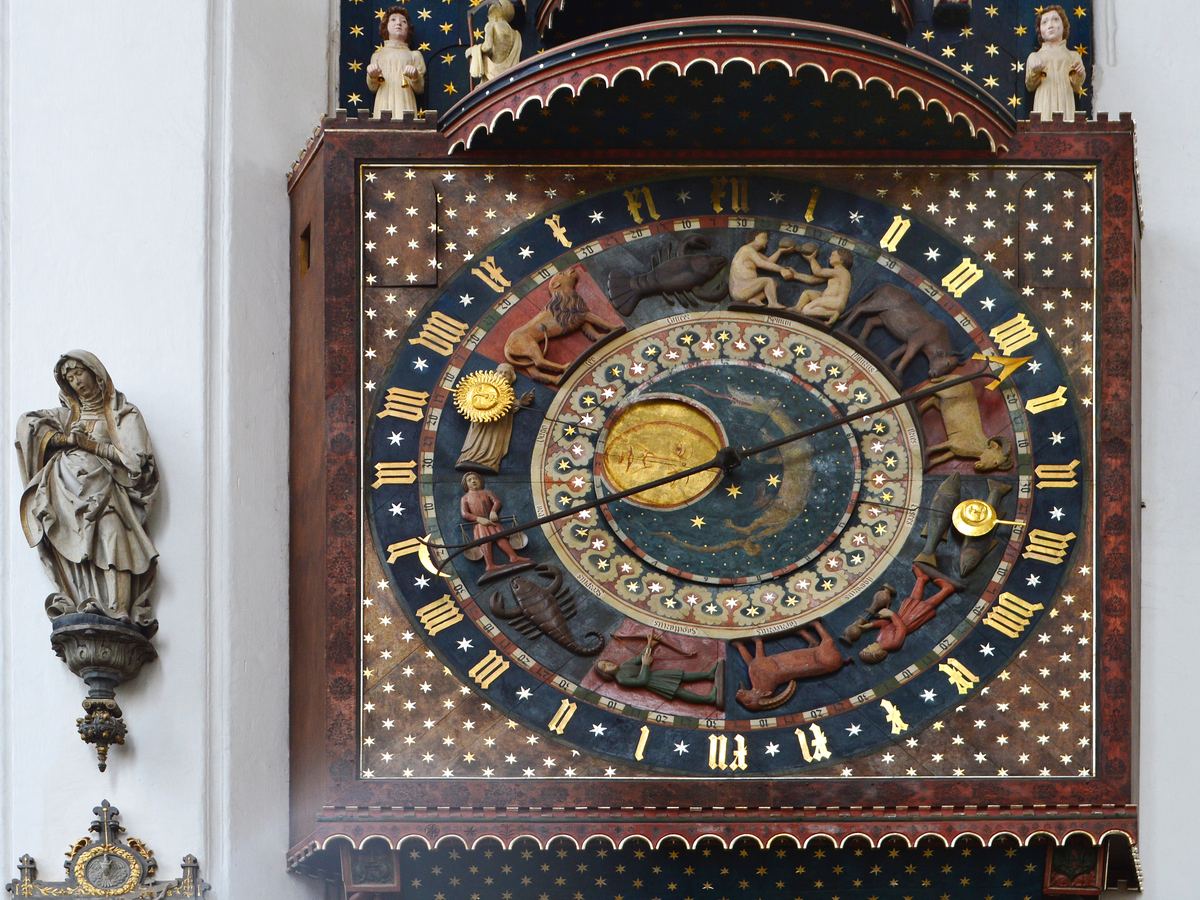
Be in the north transept for this one. Hans Düringer built the astronomical clock in 1464-1470. It stands 14 metres tall and was the largest in the world when he finished it. It stopped in 1554 and only ran again in 1990. Its figures come out once a day, at 11:57.

For lunch, try a bar mleczny, or milk bar: the subsidised canteens that outlasted communism. Neptun on Long Street serves a plate of pierogi for very little money.

The dial of the astronomical clock in St Mary's Church, with the zodiac, a golden sun and the Moon
The astronomical clock in St Mary's. Photo: Scotch Mist, CC BY-SA 4.0
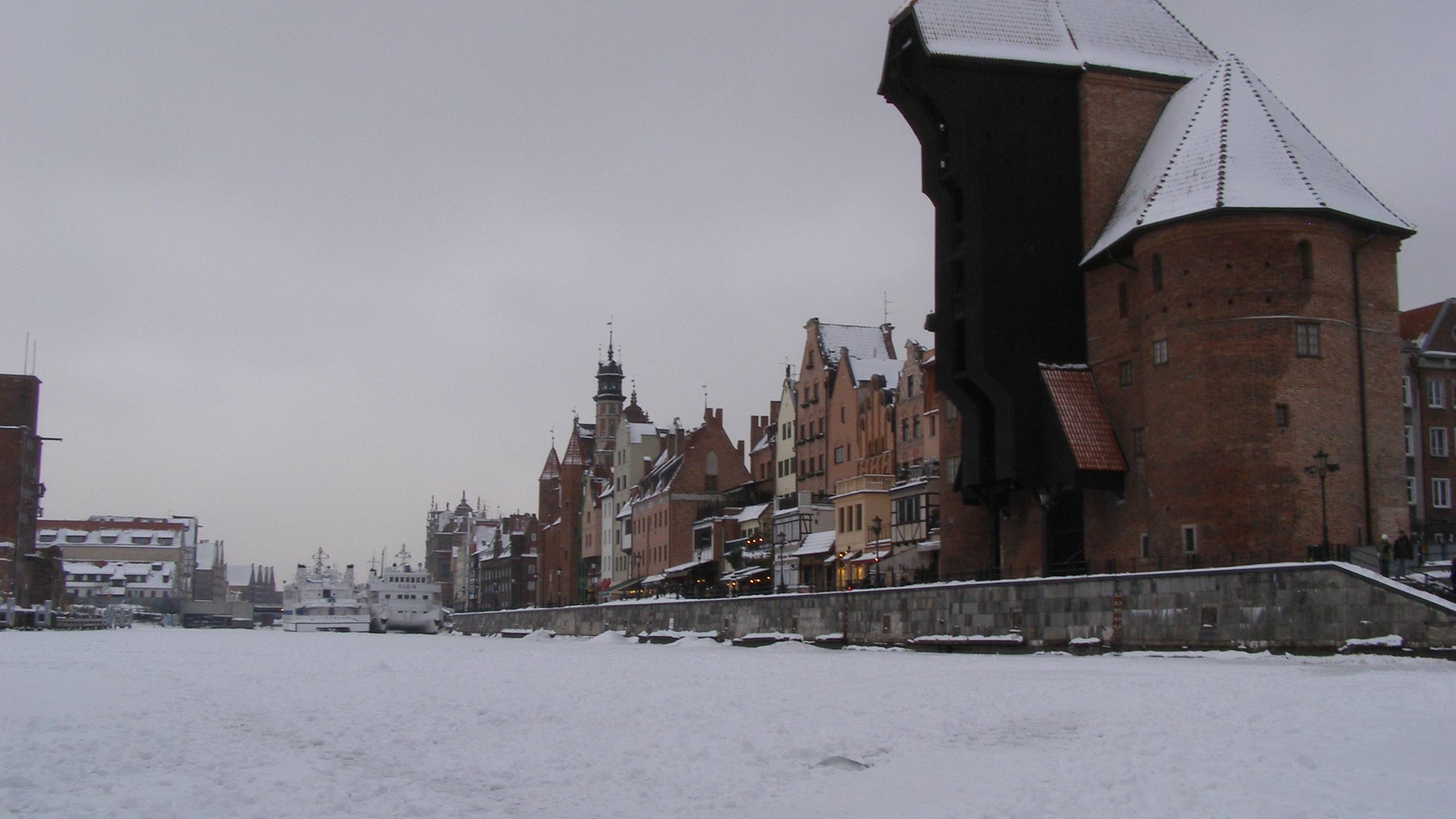
The Crane, its timber body black against a grey sky, with snow on its roofs and on the frozen Motława
The Crane in a hard winter, with the Motława frozen over. Photo: Andrzej Otrębski, CC BY-SA 3.0

13:00

A crane that ran on human legs

Finished in 1444, this was the largest port crane in medieval Europe, and it doubled as a city gate. Dock workers walked inside two wooden wheels, each more than six metres across, and their legs lifted up to four tonnes. It set the masts on ships built here and worked for about 400 years, with no electricity and no autovacuum.

The timber burned in 1945. It was rebuilt, the lifting gear went back in, and in 2024 it reopened after a three-year renovation with a new exhibition on the old port: navigation, imported goods, mooring fees and life in the port tavern. Only 50 people fit inside at once, so it pays to arrive early.

Wednesdays 13:00-17:00, free. Other days from 09:00, 23 zł, closed Mondays. Last entry one hour before closing. 18 minutes on foot from the venue. National Maritime Museum, map.

14:15

Forty million years in your pocket

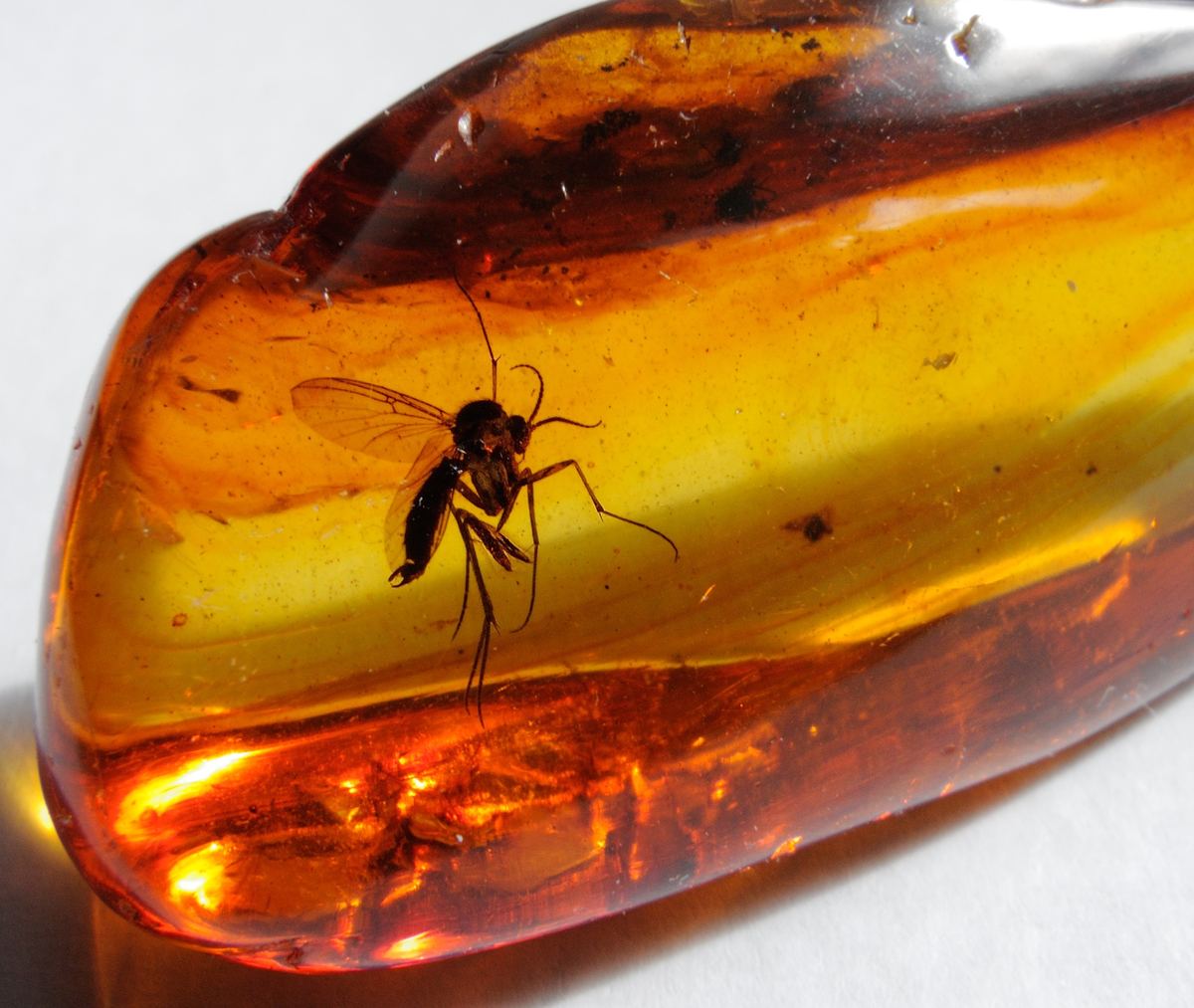
Amber is fossil resin from forests that grew here about 40 million years ago, and it still washes up on the local beaches after storms. Hold a piece up to the light and you may find a fly, a seed or a bubble of very old air.

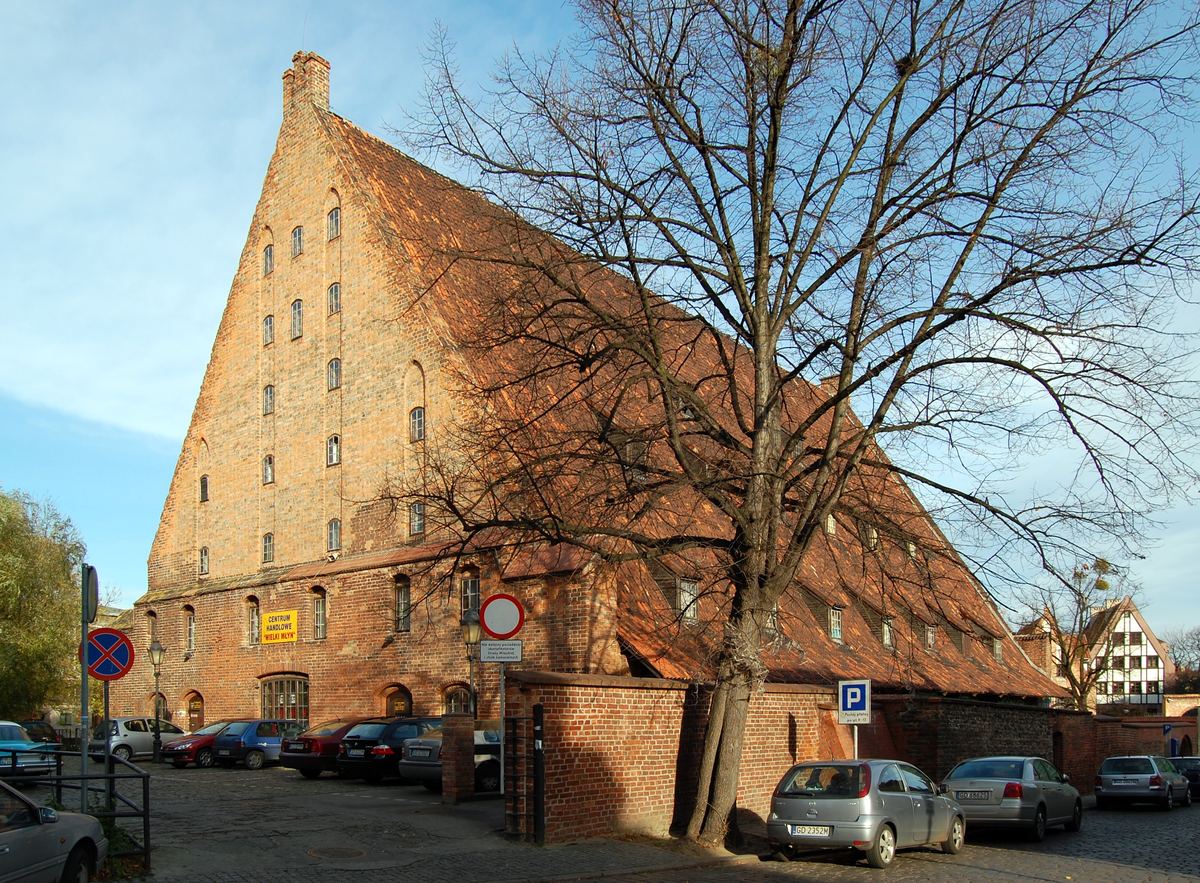
The Amber Museum has more than 1,000 pieces, and the building is half the reason to go. The Great Mill went up in 1350 under the Teutonic Knights, with 18 water wheels, and kept grinding flour until 1945.

Open 10:00-18:00, closed Tuesdays, free on Mondays. 26 minutes on foot from the venue. Museum of Gdańsk, map.

A polished piece of glowing Baltic amber with a small fly trapped inside
A fly in Baltic amber. Photo: Zacharie Grossen, CC BY-SA 4.0
The steep brick gable and long roof of the Great Mill behind a bare winter tree
The Great Mill. Photo: Marcin Białek, CC BY-SA 4.0

15:15

The brewer who mapped the Moon

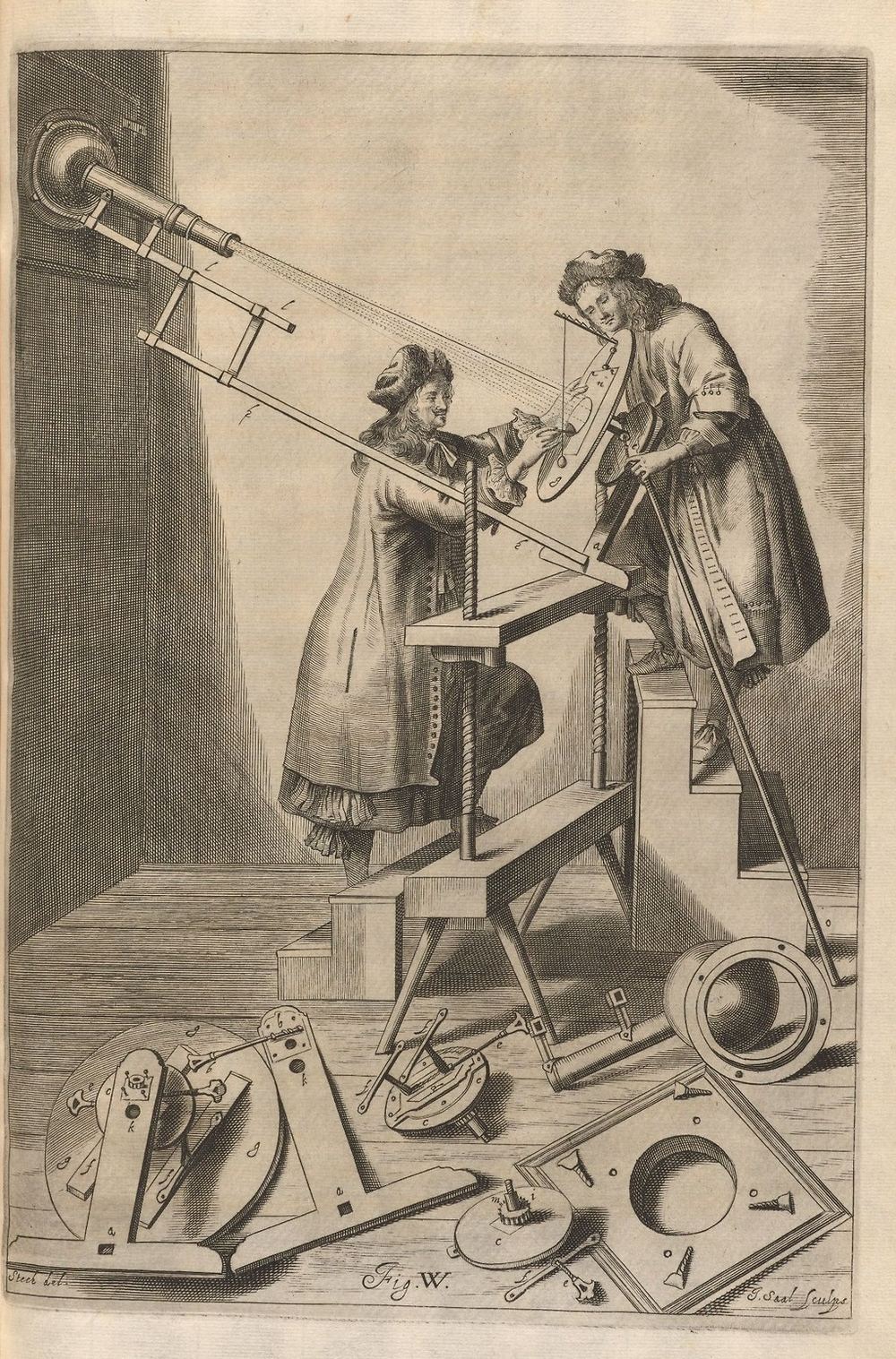
Two minutes from the mill, opposite the Old Town Hall, sits a statue of Johannes Hevelius with a book on his knee. By day he brewed beer and ran the brewers' guild. By night he worked on a platform he had built across the roofs of his three houses on this street. His book Selenographia (1647) founded the study of the Moon's surface.

His second wife, Elisabeth Koopmann, observed with him and is one of the first women astronomers we know by name. After he died she published their star catalogue.

A fire destroyed the observatory in 1679 and nothing of the houses is left, only a plaque at the corner of Korzenna and Heweliusza. Stay a few minutes anyway. The sky is about to start doing what he came up here for.

Engraving of Johannes and Elisabeth Hevelius measuring the sky together with a large brass sextant
Johannes and Elisabeth Hevelius at work with the great sextant. Johannes Hevelius, Machina coelestis, 1673, public domain

15:32

That is sunset on Wednesday, and within a minute of it on conference day. Up here you get about eight hours of daylight in late November, so nobody waits for the evening to start. The lights come on along the water, the market fills up, and the city moves indoors to somewhere warm.

16:00

Hot wine on the Coal Market

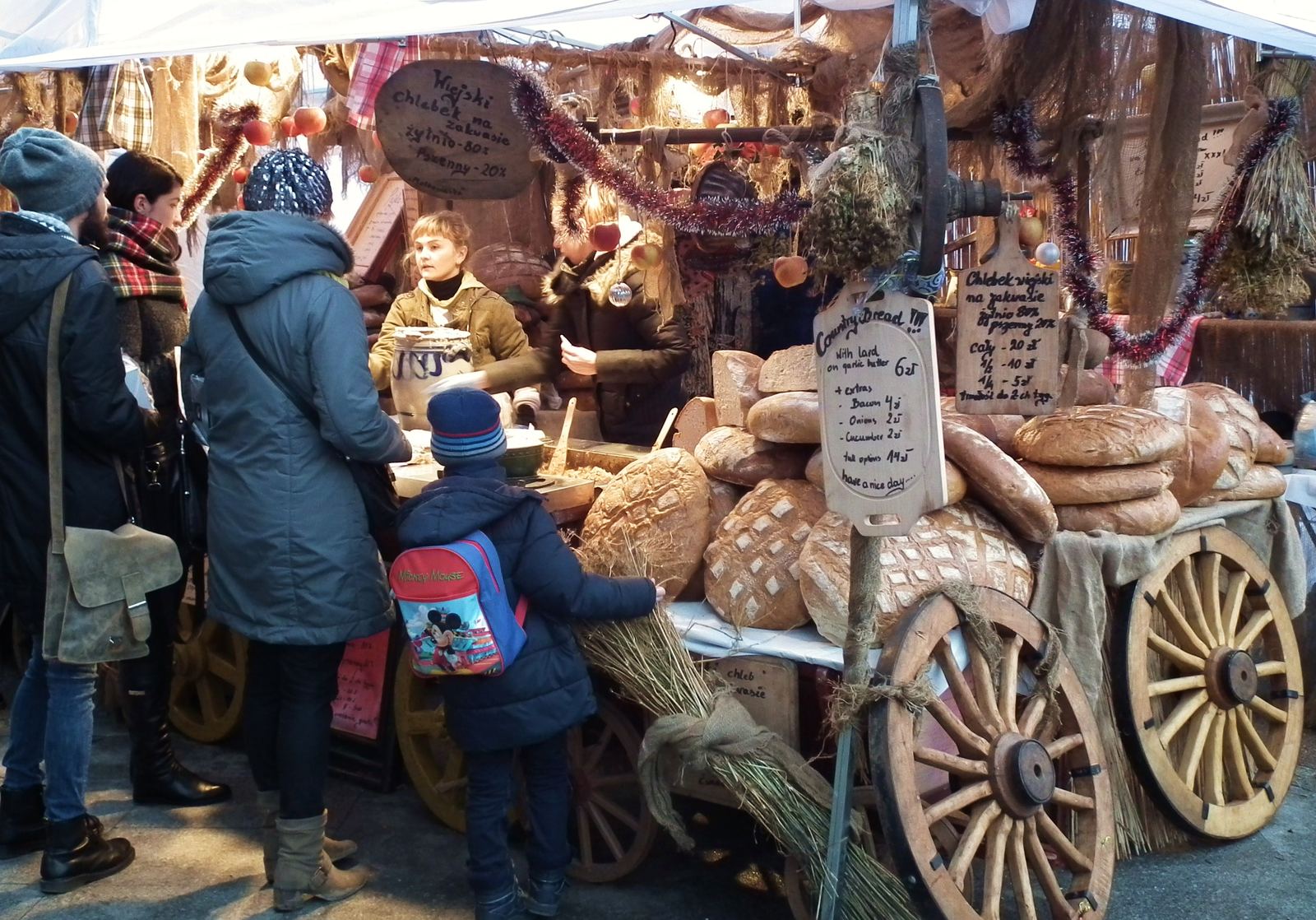
From 20 November to 23 December, Targ Węglowy, the old Coal Market, fills with wooden stalls. More spread along Tkacka Street past the Great Armoury and down Bogusławskiego towards the Shakespeare Theatre. There is a carousel, handmade Christmas ornaments, heated shelters when the wind gets up, and food from everywhere, including smoked oscypek cheese from the mountains.

Get a cup of grzaniec, the local mulled wine, and do your Christmas shopping while it is still November. It works just as well on conference day, after the last talk.

Free to enter. Daily from 12:00, until 20:00 Sunday to Thursday and 21:00 on Friday and Saturday. 23 minutes on foot from the venue. Gdańsk Christmas Market, map.

People in winter coats at a Christmas market stall piled with loaves of bread on a wooden cart
A bread stall at the market in 2015. Photo: MOs810, CC BY-SA 4.0

19:00

Mariacka Street after dark

This short cobbled street runs from St Mary's down to the river. By day it is all amber shops and cameras. After dark you get the stone terraces in front of the houses, the gargoyle water spouts and the lamps almost to yourself. Then walk out through the gate to the waterfront, where the restaurants are.

21:00

A drink with gold in it

Back to Neptune. The legend says the citizens threw so many gold coins into his fountain that he lost his temper and smashed them with his trident into flakes, and that is how Goldwasser got its gold: a herbal liqueur with flakes of 23-carat gold drifting through it.

The paper trail starts in 1598, when a Dutch distiller called Ambrosius Vermeulen became a citizen of the city. It was made here until 2009 and now comes from Germany, still under the name Danziger Goldwasser, Danzig being the city's German name. Ask for a glass, then walk back across the Long Market. It looks better now than it did this morning.

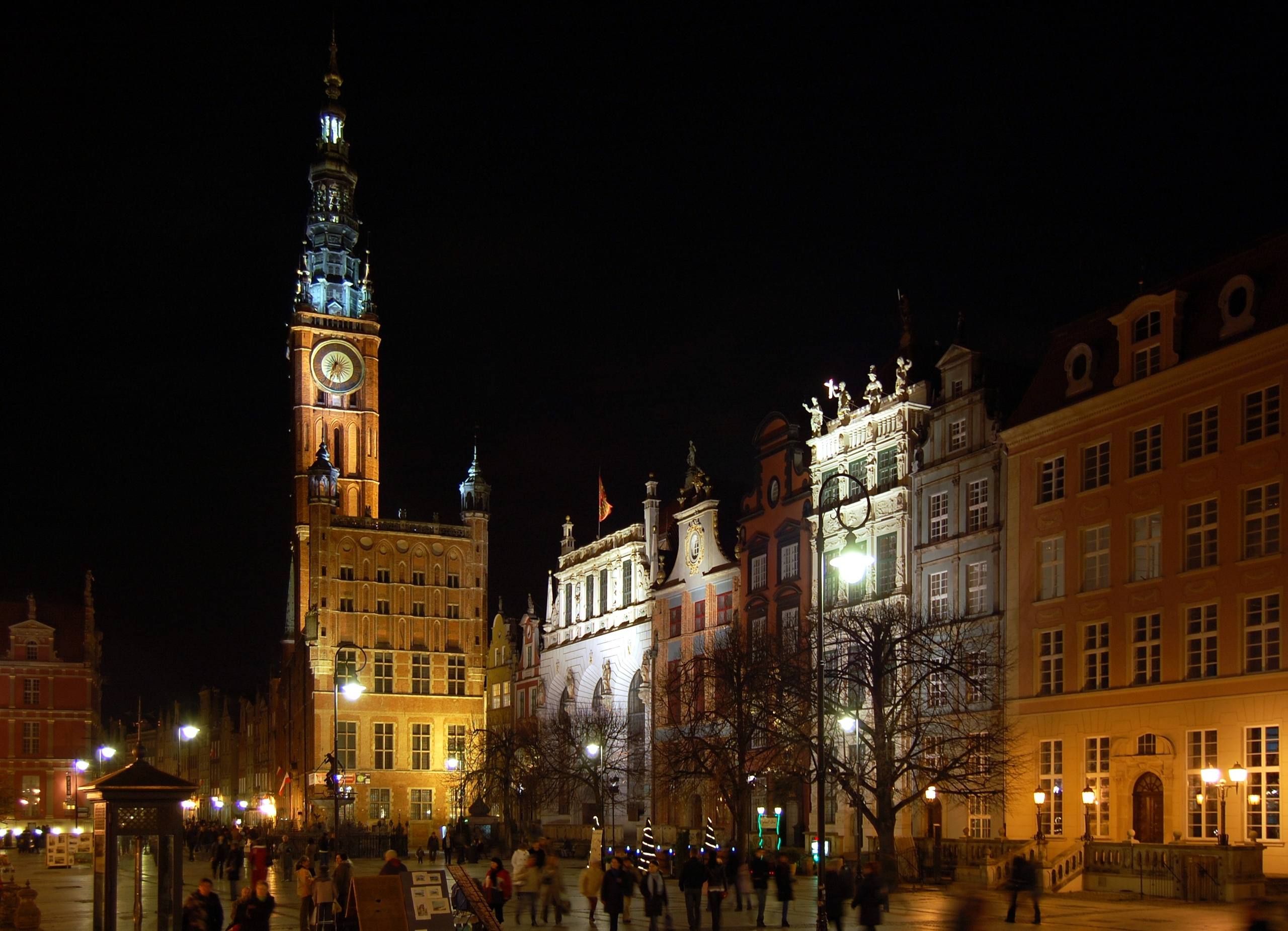
The Long Market at night, with the Town Hall tower and floodlit gabled houses against a black sky
The Long Market at night. Photo: Marcin Białek, CC BY-SA 4.0

That was Wednesday. Tuesday is the reason to come: seven talks in one room, nothing to miss, €60 net.

Register Now

If you can stay another day

The twentieth century turned here twice, and you can stand on both spots. Give each one a morning, and plan something light for afterwards.

14 August 1980: over the wall

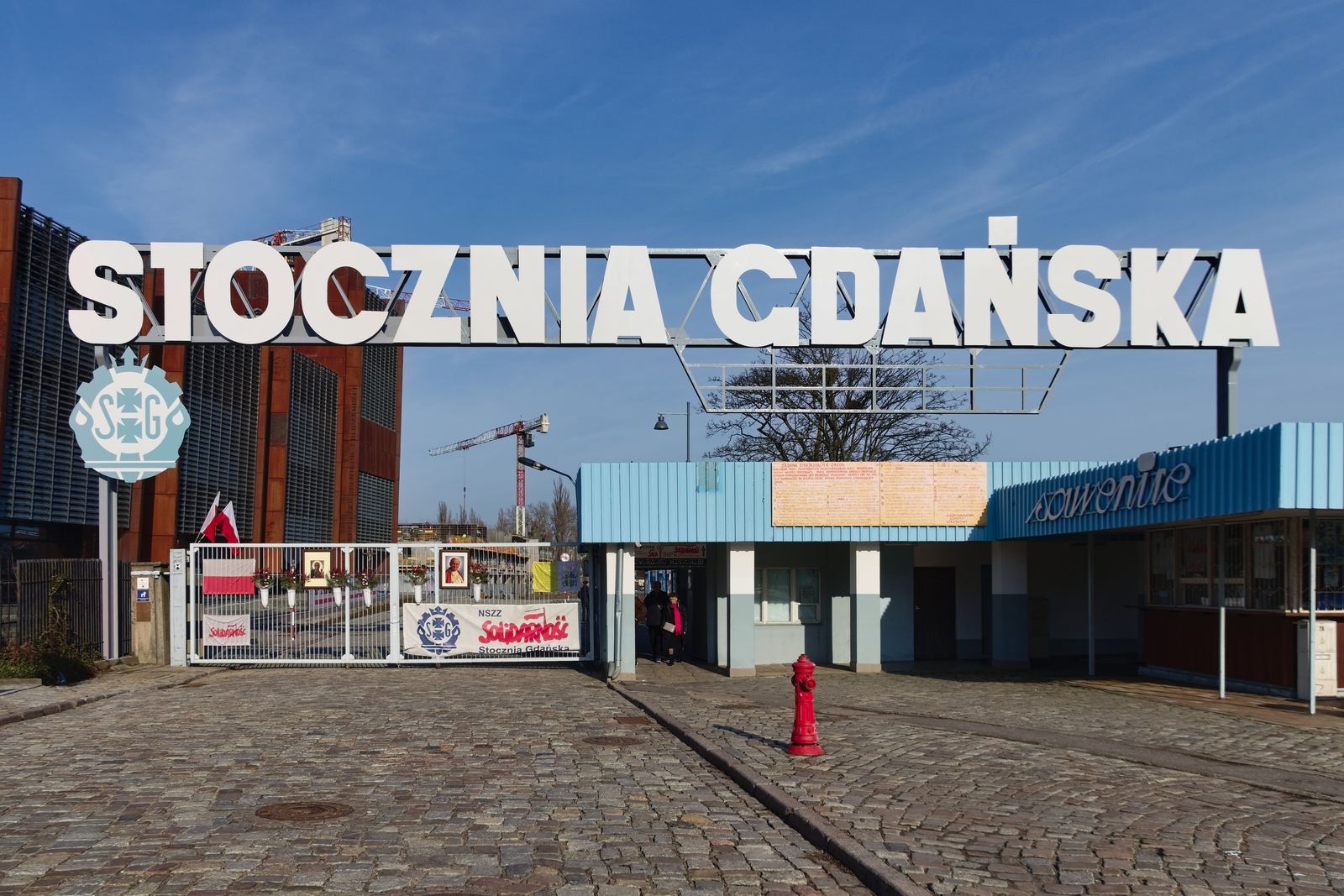
On 7 August 1980 the Lenin Shipyard fired Anna Walentynowicz, a crane operator, five months before she was due to retire. A week later the shipyard stopped work to get her job back. Lech Wałęsa, an electrician who had been sacked from the same yard, came over the three-metre wall to join them.

The strike spread. Its 21 demands were written by hand on plywood boards and hung over Gate No. 2. On 31 August the government signed, and Solidarity became the first independent trade union in the Soviet bloc. Nine years later, communist rule in Poland was over.

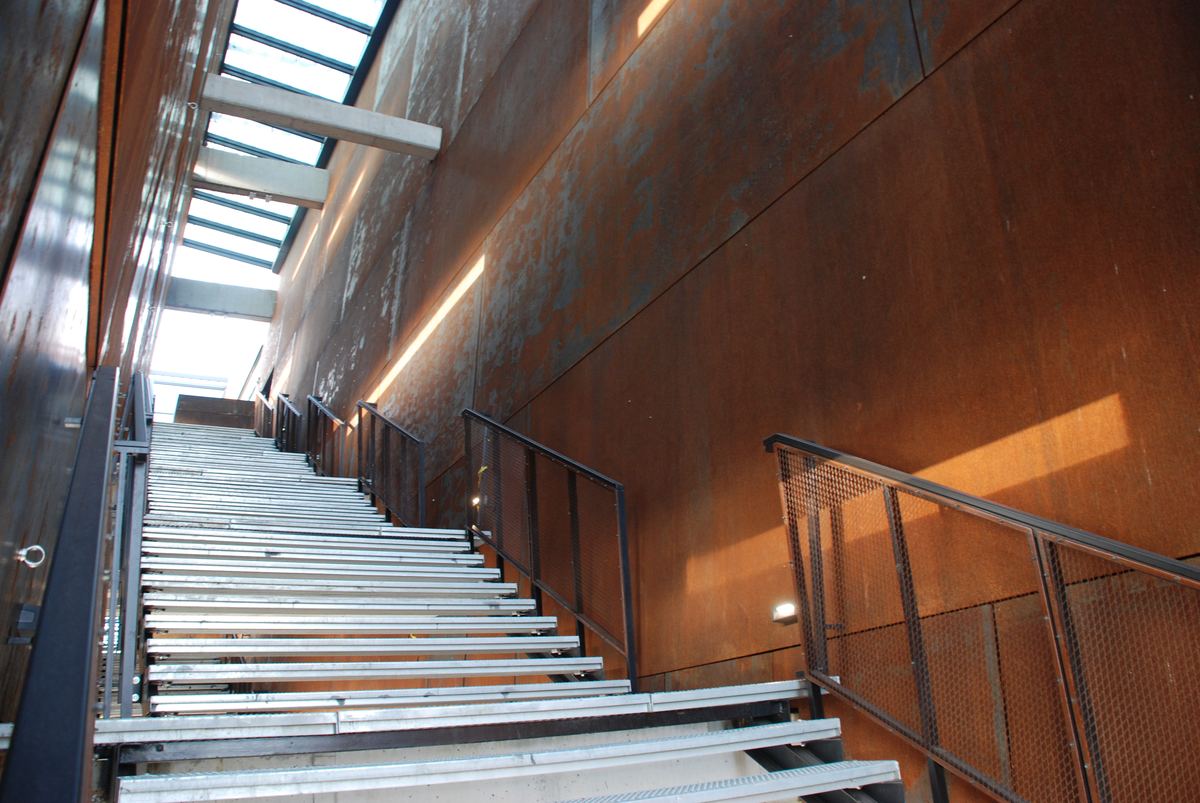
The plywood boards are now on UNESCO's Memory of the World Register, and they are the most valuable thing in the European Solidarity Centre, the building of rust-coloured steel beside the gate.

Exhibition Monday and Wednesday to Friday 10:00-17:00, weekends 10:00-18:00, closed Tuesdays, about 40 zł with audio guide. The gate and the monument to the shipyard workers killed in 1970 are outdoors. 38 minutes on foot from the venue. European Solidarity Centre, map.

Gate No. 2 of the Gdańsk Shipyard, under a large sign reading Stocznia Gdańska
Gate No. 2, with the shipyard behind it. Photo: Adrian Tync, CC BY-SA 4.0
A long staircase rising beside a wall of rust-coloured steel inside the European Solidarity Centre
Inside the European Solidarity Centre. Photo: Justyna Malinowska, CC BY-SA 4.0

1 September 1939: the first shots

A little before five in the morning, the German battleship Schleswig-Holstein, moored in the harbour on a courtesy visit, opened fire on the Polish depot on the Westerplatte peninsula. It is often described as the opening battle of the Second World War. The garrison of a little over 200 men was meant to hold for 12 hours. It held for seven days.

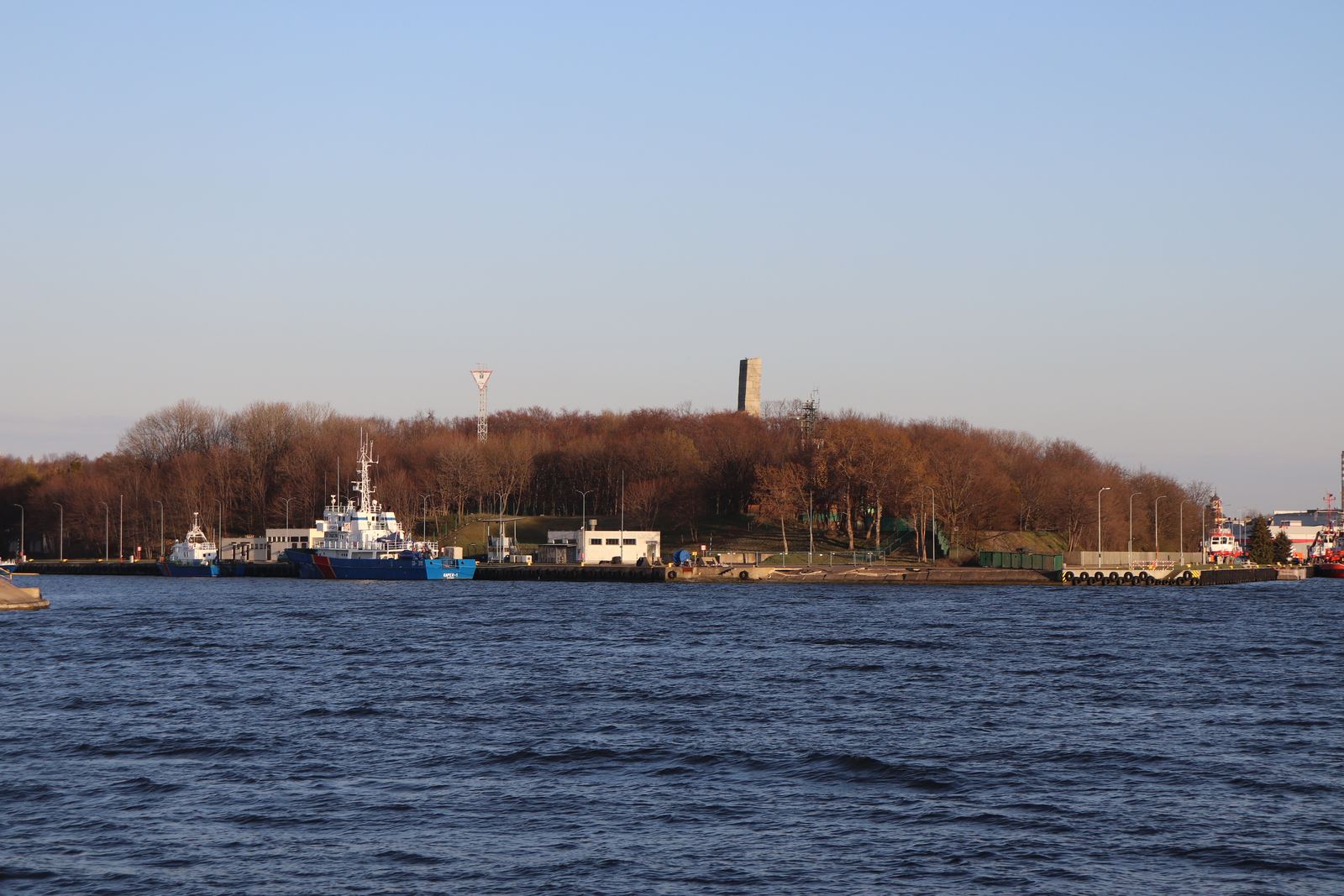
Westerplatte today is quiet: ruined barracks, a guardhouse, the sea, and a monument on a mound at the end of the walk. A new museum is being built there, so parts are fenced off, but the route stays open.

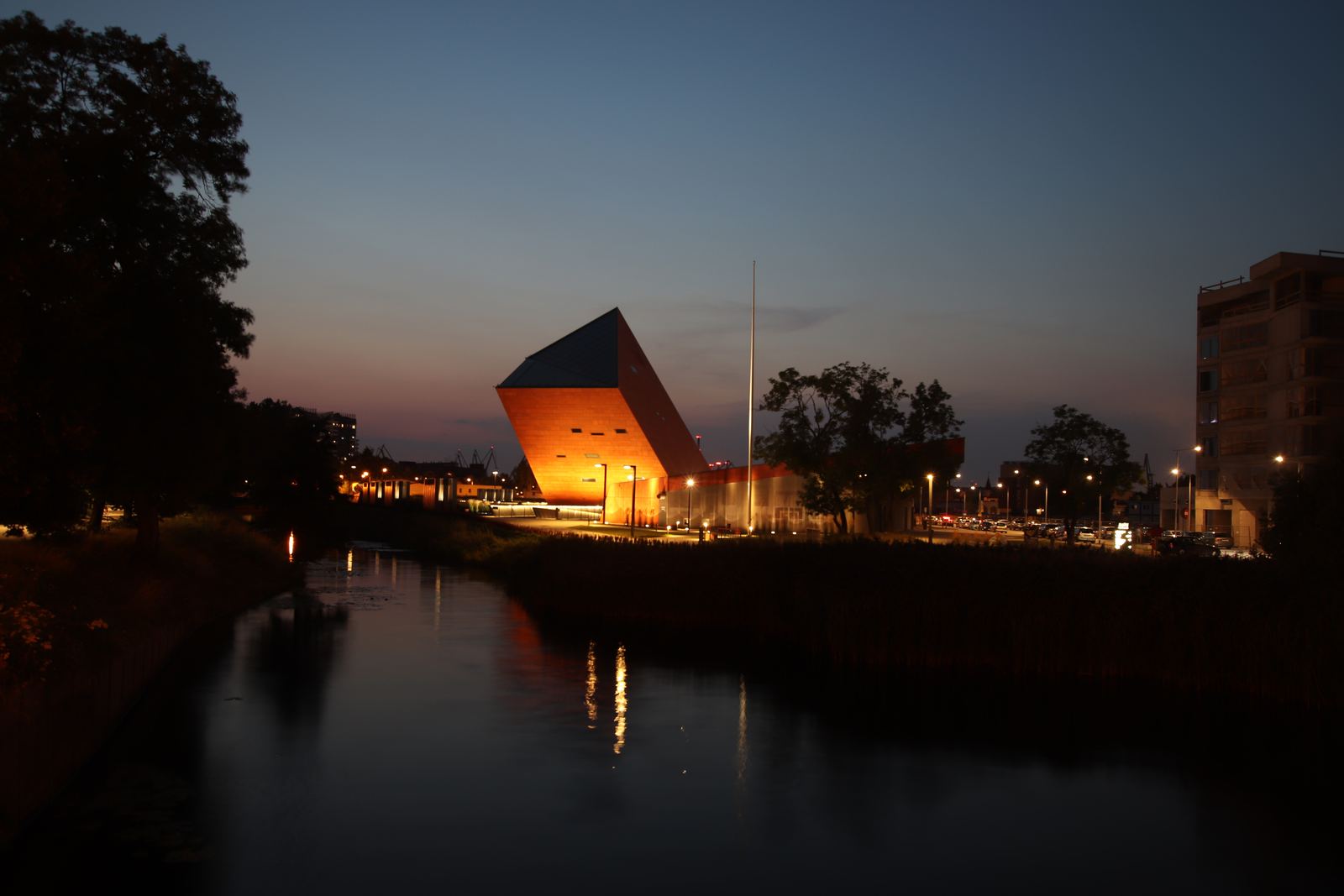
The Museum of the Second World War, opened in 2017, tells the rest. Its 40-metre tower leans over the canal and most of the exhibition is underground. Allow at least three hours. It is not an easy visit, and it should not be.

Westerplatte: bus 106 or 138, about 30 minutes from the main station. The boats are seasonal, so plan on the bus. Museum: Tuesdays 10:00-16:00, Wednesday to Sunday 10:00-18:00, closed Mondays, 29 minutes on foot from the venue. Museum of the Second World War, map of Westerplatte.

The Westerplatte peninsula from across the water, with rust-coloured autumn trees and the monument rising above them
Westerplatte from the water, with the monument above the trees. Photo: Andrzej Otrębski, CC BY-SA 4.0
The leaning tower of the Museum of the Second World War, lit up at dusk beyond a dark canal
The Museum of the Second World War at dusk. Photo: Andrzej Otrębski, CC BY-SA 4.0

Or get out of town

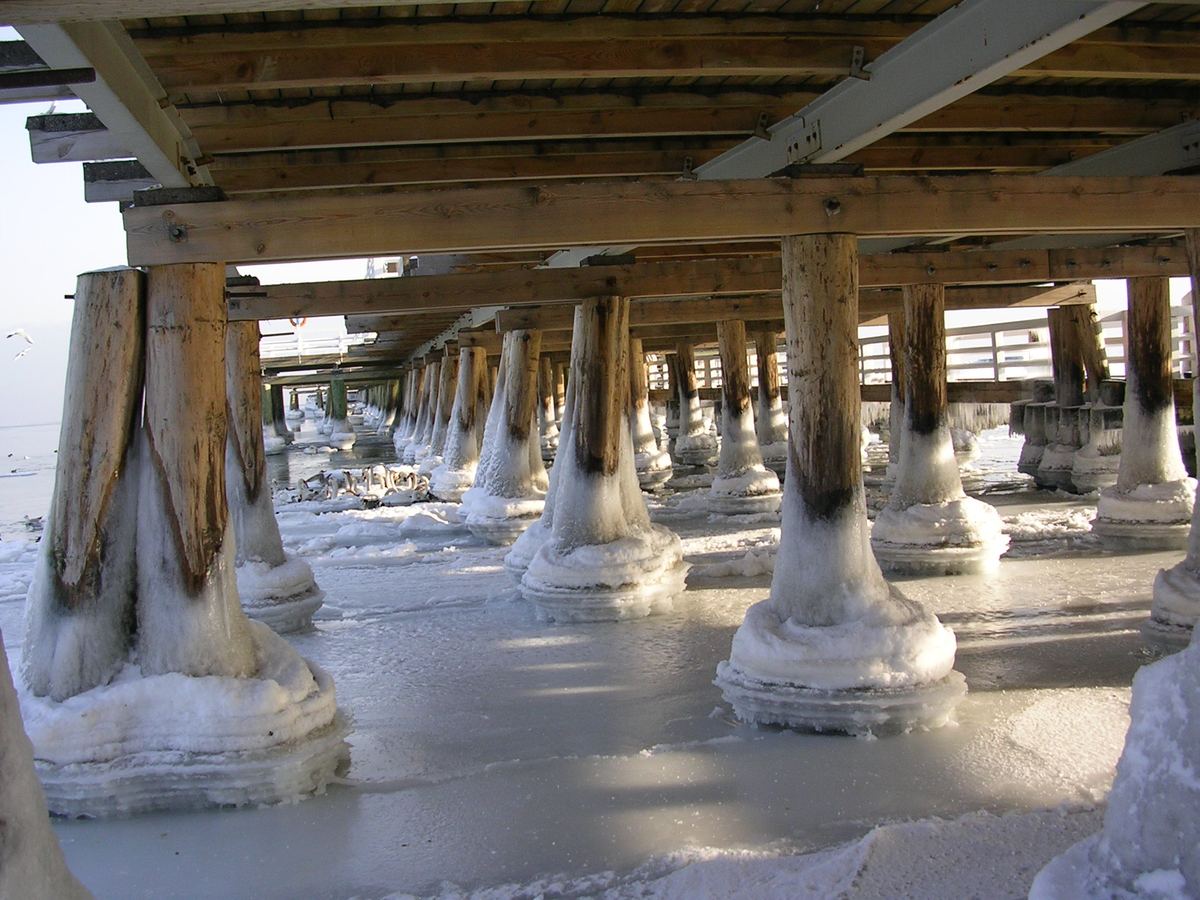
Under Sopot Pier in a hard winter, with thick ice around the wooden posts
Under the pier in a hard winter. Photo: Tomasz Przechlewski, CC BY 3.0

Sopot: out to sea on foot

Europe's longest wooden pier was first built in 1827 and runs 511 metres into the Baltic. Off season you walk it for free, with the wind and the gulls for company. Bring a hat.

About 20 minutes by SKM train. Sopot Pier, map.

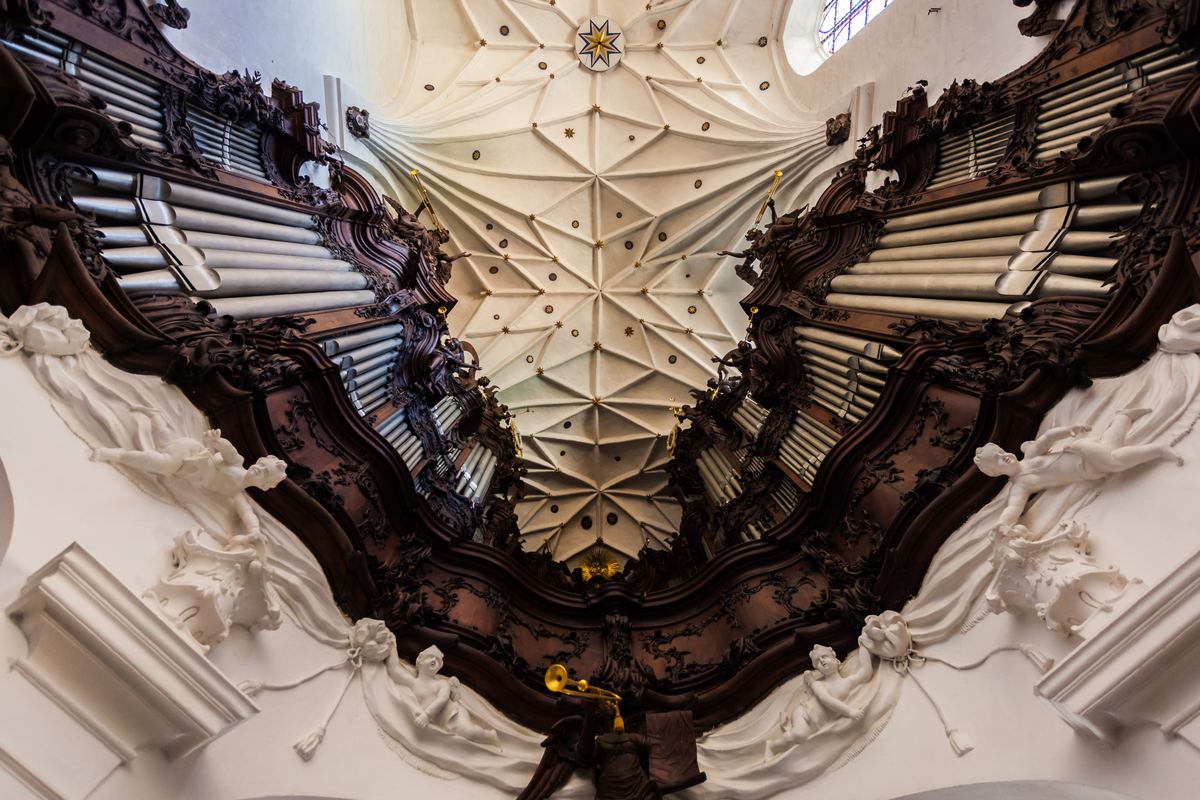
Looking up at the dark carved organ case in Oliwa Cathedral, spreading like wings under a white vault
The organ case, seen from below. Photo: Diego Delso, CC BY-SA 3.0

Oliwa: the organ with moving angels

Johann Wulff, a Cistercian monk, built this organ between 1763 and 1788. It now has 7,876 pipes, and when it plays, carved angels move their trumpets and bells while a sun and stars turn on the case.

20-minute concerts Monday to Saturday at 12:00, Sundays at 15:00. SKM train to Gdańsk Oliwa, then 15 minutes on foot. Oliwa Cathedral, map.

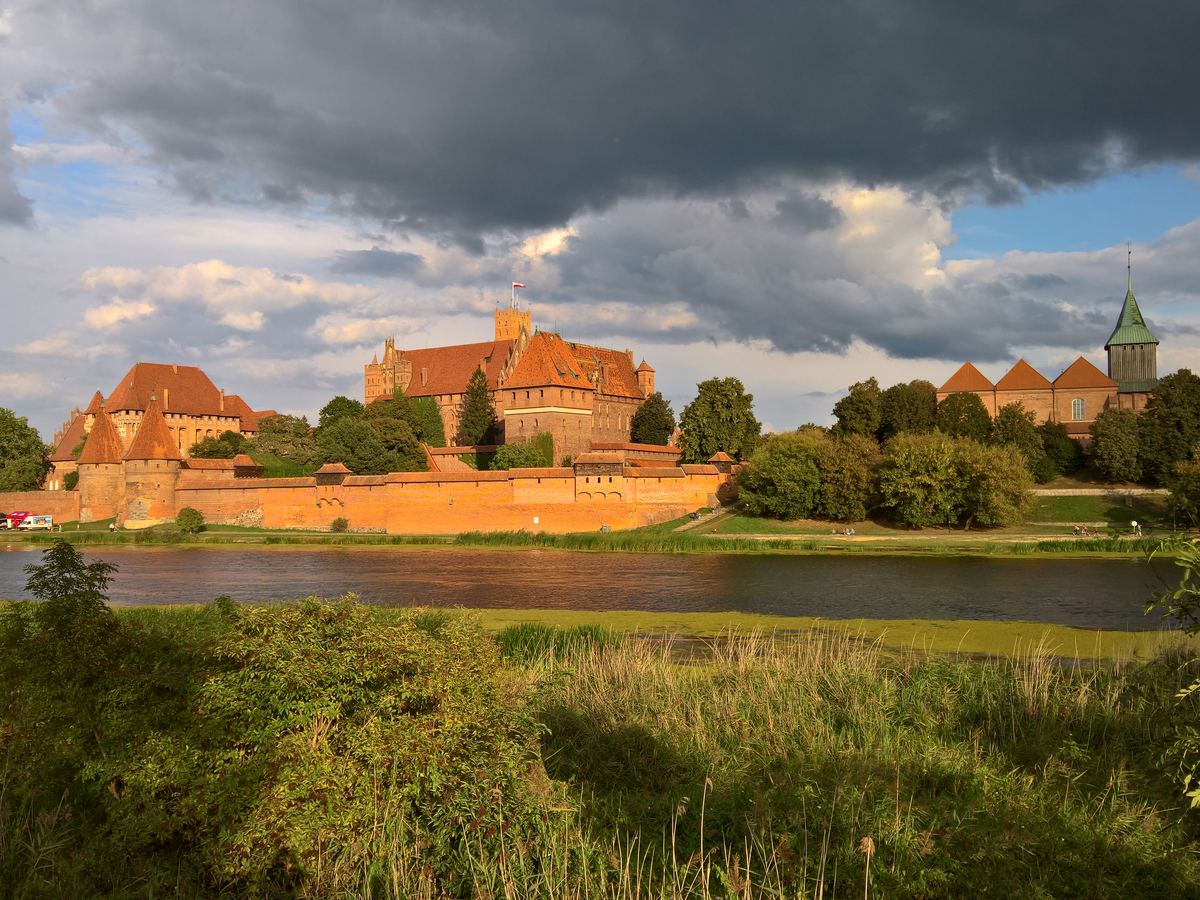
Malbork Castle in low golden light across the river Nogat, under a dark storm cloud
Malbork across the river Nogat. Photo: SimonCiminski, CC BY-SA 4.0

Malbork: a brick castle the size of a town

In 1309 the Grand Master of the Teutonic Knights moved his seat here from Venice. The fortress grew to 21 hectares, the largest in Europe by area. More than half of it was destroyed in 1945, and it has been rebuilt piece by piece since.

24 to 52 minutes by train from Gdańsk Główny. Tuesday to Sunday 09:00-16:00, last entry to the full route 12:45, so go in the morning. On Mondays only the outdoor route is open. Malbork Castle.

What is open when

Monday and Tuesday close different places, which is why we would pick Wednesday.

PlaceMon 23 NovTue 24 Nov, conferenceWed 25 NovFrom the venue
St Mary's Church08:30-17:3008:30-17:3008:30-17:3020 min walk
Artus Court10:00-16:00, freeClosed10:00-16:0018 min walk
The CraneClosed09:00-17:0013:00-17:00, free18 min walk
Amber Museum10:00-18:00, freeClosed10:00-18:0026 min walk
Christmas market12:00-20:0012:00-20:0012:00-20:0023 min walk
European Solidarity Centre10:00-17:00Closed10:00-17:0038 min walk
Museum of the Second World WarClosed10:00-16:0010:00-18:0029 min walk
Oliwa organ concert12:0012:0012:00SKM train
Malbork CastleOutdoor route only, free09:00-16:0009:00-16:00Train

Hours as published by each place on 31 October 2026. Last entry is often an hour before closing, so check before you go.

Weather. Late November here usually means a few degrees above freezing, damp and windy. Snow is possible but far from certain, and some of our photos come from harder winters. Pack a proper coat.

Getting around. The nearest train stop to the venue is Gdańsk Śródmieście, 15 minutes on foot, with SKM trains to Oliwa and Sopot. Trams and buses cover the rest of the city, see ZTM Gdańsk. The city's tourist office runs visitgdansk.com.

Evenings indoors. Try the Gdańsk Shakespeare Theatre, with its opening roof, the Baltic Philharmonic on the water or the Baltic Opera.

Photos. The photographs on this page were cropped and resized. Each one is credited under the picture with its licence.

Join Us For PGConf.PL 2026

24 November 2026

ARCHE Dwór Uphagena, Gdańsk, Poland

Our Sponsors

PgConf.PL would not be possible without our generous sponsors.